Table of Contents
Clear aligner treatment has changed considerably over the past two decades. Digital treatment planning, in-house aligner production and more advanced manufacturing workflows have given orthodontists greater control over treatment, but the performance of any clear appliance still depends heavily on one fundamental component: the material from which it is made.
Zendura® Dental develops advanced thermoplastic materials specifically for orthodontic applications, including clear aligners, retainers and attachment templates.
For orthodontists, laboratories and aligner manufacturers, the aim is straightforward: provide materials engineered around the requirements of the appliance rather than treating every clear thermoplastic as essentially the same.
Whether you are producing clear aligners in-house, working with a laboratory or looking for a more durable retainer material, understanding the differences between thermoplastics can help you make a more informed choice.
What Is Zendura Dental?#
Zendura Dental is the orthodontic thermoplastics brand of Bay Materials LLC, a materials science company founded in Silicon Valley in 2000 and now part of the Straumann Group.
Zendura specialises in the development and manufacture of thermoplastic materials for clear aligners, clear retainers and attachment templates.
Rather than using general-purpose plastics for orthodontic applications, Zendura materials are developed around specific requirements such as force delivery, elasticity, durability, clarity, dimensional stability and thermoforming performance.
The range includes materials for different stages and applications within clear aligner therapy, allowing orthodontists and laboratories to select a thermoplastic according to what they need the finished appliance to do.
Why Does Clear Aligner Material Matter?#
Two clear aligners can look almost identical while behaving very differently.
The properties of the thermoplastic influence how the appliance responds when it is placed over the patient’s teeth and what happens as it remains under load.
Important characteristics can include:
- Force delivery and force retention
- Elasticity and recovery
- Stiffness
- Stress relaxation
- Resistance to cracking and tearing
- Optical clarity
- Patient comfort
- Thermoforming consistency
These characteristics are particularly important for active clear aligners.
When an aligner is fitted, the patient’s teeth have not yet reached the position represented by the appliance. The material deforms as the aligner is seated, creating the forces used to encourage tooth movement.
The behaviour of that material over the following hours and days can therefore be just as important as the initial force generated when the aligner is first inserted.
Clear Aligner Materials vs Retainer Materials#
Although clear aligners and retainers may look similar, they perform different jobs.
A clear aligner is an active orthodontic appliance. Its purpose is to apply controlled forces that move teeth towards planned positions.
A clear retainer is primarily a passive appliance. Its purpose is to help maintain tooth position following orthodontic treatment.
Those different objectives can require different material characteristics.
For an aligner, factors such as elasticity, force retention and stress relaxation can be particularly important. A retainer may place greater emphasis on rigidity, dimensional stability, durability and resistance to cracking during repeated long-term use.
This is why choosing an orthodontic thermoplastic should begin with the intended application rather than simply the appearance or thickness of the sheet.
Zendura Clear Aligner Materials#
Zendura offers specialised materials for clear aligner production, including Zendura FLX and Zendura VIVA.
Zendura FLX#
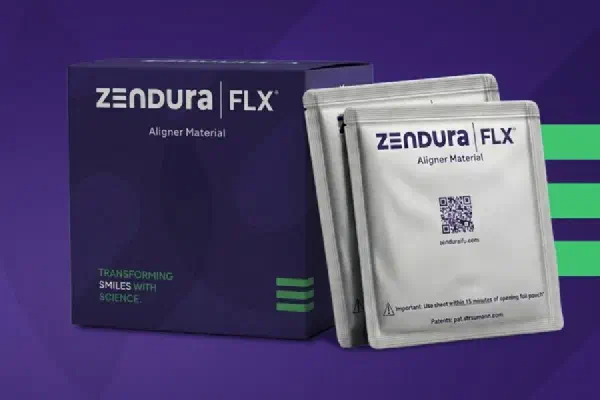
Zendura FLX is a multilayer clear aligner material designed to balance force delivery, flexibility, durability and patient comfort.
Its construction uses rigid outer layers around an elastomeric inner layer, allowing different components of the material to contribute different mechanical characteristics.
For orthodontists and aligner manufacturers, this approach provides an alternative to relying on a single homogeneous thermoplastic layer to provide every property required from an active appliance.
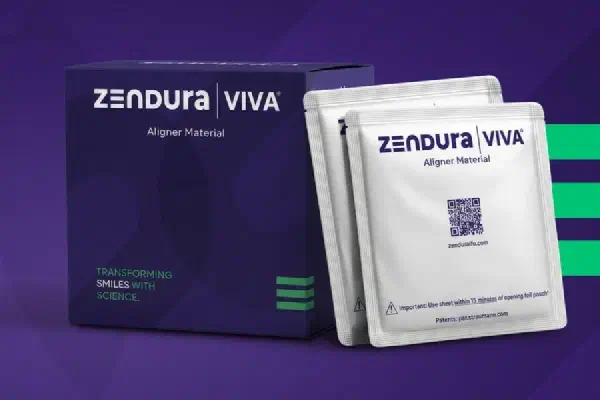
Zendura VIVA#
Zendura VIVA provides another option within the Zendura clear aligner range.
It is designed for applications where greater elasticity and sustained force delivery may be desirable, including selected treatment stages and more challenging tooth movements.
Having different aligner materials available also means material selection can become part of the treatment and manufacturing strategy rather than a simple one-material-fits-all decision.
Zendura Clear Retainer Materials#
Retention places different demands on a thermoplastic.
Once active orthodontic treatment has finished, the objective changes from moving teeth to maintaining their corrected positions. A clear retainer needs to maintain its shape while withstanding repeated insertion, removal and everyday wear.
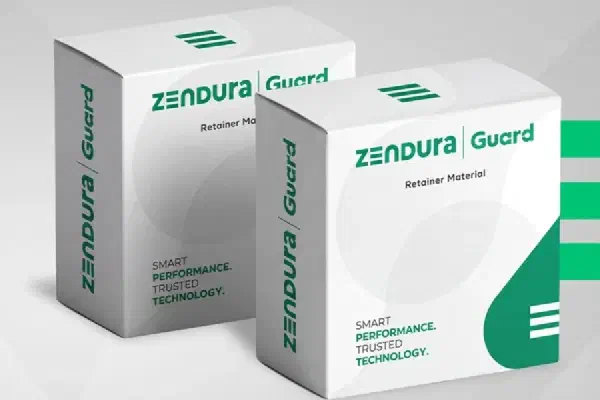
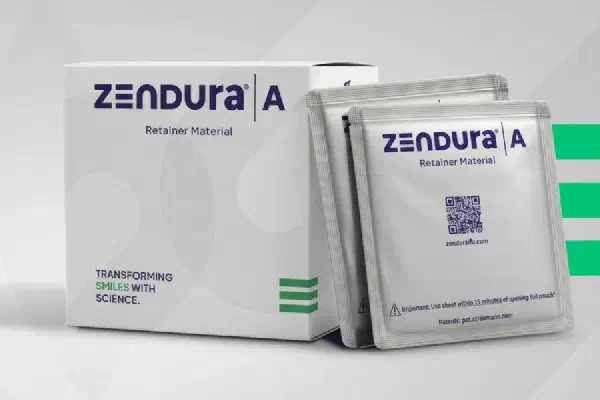
Zendura has developed retainer materials — including Zendura A and Zendura Guard — with properties including durability, clarity and dimensional stability in mind.
For orthodontic practices producing retainers in-house, the material used can affect not only appliance performance but also practical considerations such as thermoforming, trimming, finishing and the frequency with which damaged appliances need replacing.
What About Attachment Templates?#
Attachments play an important role in many clear aligner treatment plans, helping the appliance generate the forces required for particular tooth movements.
The template used to place those attachments has its own material requirements.
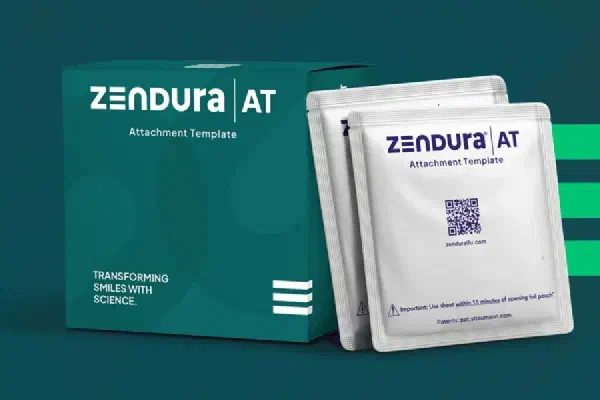
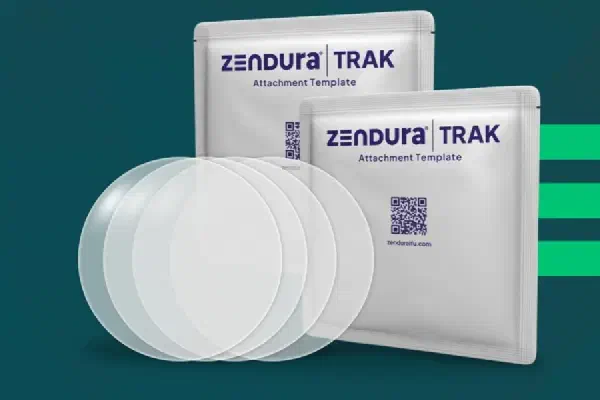
Zendura’s portfolio therefore also includes thermoplastics developed for attachment template fabrication, including Zendura AT and Zendura TRAK.
This allows orthodontic practices and aligner manufacturers to consider the materials used across several stages of the clear aligner workflow rather than focusing exclusively on the aligner itself.
Why Thermoplastic Properties Matter to Orthodontists#
It can be tempting to think of thermoplastic selection primarily as a manufacturing decision.
For orthodontists, however, the properties of the material can have practical clinical consequences.
An aligner’s ability to recover its shape, retain useful force and resist damage can influence how it behaves throughout its prescribed wear period. Likewise, the durability and dimensional stability of a retainer can affect its ability to continue fitting correctly during retention.
Patient experience matters too.
Clear orthodontic appliances are typically worn for extended periods, so thickness, flexibility, surface characteristics, transparency and ease of insertion and removal can all contribute to the overall experience of treatment.
Material science is therefore closely connected to both the manufacturing and clinical sides of clear aligner therapy.
Zendura Dental US and EMEA: Which Website Should I Use?#
Zendura serves orthodontic professionals internationally, with dedicated regional websites making it easier to access relevant products, ordering information and support.
Zendura Dental US#
Orthodontists, laboratories and aligner manufacturers in the United States and North America can visit the Zendura Dental US website to explore clear aligner materials, retainer materials and attachment template products available through the North American store.
Visit Zendura Dental US: https://us.zenduradental.com/
The US site provides access to the regional product catalogue, product specifications, technical resources and direct online ordering.
Zendura Dental EMEA#
Orthodontists, dental laboratories and manufacturers across Europe, the Middle East and Africa can use the Zendura Dental EMEA website.
Visit Zendura Dental EMEA: https://emea.zenduradental.com/
The EMEA site provides regional product information, ordering and customer support, alongside technical documentation and resources for dental professionals.
Using the appropriate regional website helps ensure you are viewing the products, availability, pricing, documentation and ordering information relevant to your market.
Where Are Zendura Materials Manufactured?#
Zendura materials are manufactured in Andover, Massachusetts, USA.
Zendura is part of Bay Materials LLC and the Straumann Group, combining specialist polymer research and manufacturing expertise with international distribution and support.
The company’s focus on orthodontic thermoplastics allows material development to address the particular mechanical and manufacturing requirements associated with clear aligners and retainers.
Are Zendura Materials Only for Large Aligner Manufacturers?#
No.
Zendura materials are used across different orthodontic manufacturing environments, from aligner manufacturers and dental laboratories to orthodontic practices producing appliances in-house.
The appropriate material and ordering route will depend on your application, production workflow, thermoforming equipment and region.
Orthodontists interested in bringing more appliance production in-house can therefore explore the same underlying material considerations that are relevant to larger-scale aligner manufacturing.
What Should Orthodontists Look for in a Clear Aligner Material?#
There is more to compare than thickness and transparency.
When assessing clear aligner thermoplastics, consider how the material performs throughout its intended use rather than simply how it looks immediately after thermoforming.
Relevant questions include:
How well does the material retain force?
Clear aligners remain under deformation during wear. Understanding how their mechanical behaviour changes over time can therefore be important.
How elastic is the material?
The appliance needs to deform during insertion and removal while recovering towards its intended shape.
How resistant is it to cracking and tearing?
Aligners experience repeated mechanical stresses throughout everyday use.
How consistently does it thermoform?
Predictable forming is particularly important for practices, laboratories and manufacturers producing appliances repeatedly.
How clear does it remain?
Aesthetics are one of the reasons patients choose clear orthodontic treatment.
Is it designed specifically for the application?
An active aligner and a long-term retainer perform different functions, so the same material characteristics should not automatically be expected from both.
Frequently Asked Questions About Zendura Dental#
What is Zendura Dental?#
Zendura Dental is a specialist developer and manufacturer of advanced thermoplastic materials for clear aligners, retainers and attachment templates. Zendura is a brand of Bay Materials LLC, which is part of the Straumann Group.
Who uses Zendura materials?#
Zendura materials are designed for orthodontic and dental applications and are used by orthodontic professionals, dental laboratories and aligner manufacturers.
Does Zendura make clear aligners?#
Zendura manufactures the thermoplastic materials used to fabricate orthodontic appliances rather than providing a single consumer clear aligner treatment system.
This distinction gives orthodontists, laboratories and manufacturers the ability to incorporate specialist materials into their own appliance production workflows.
What is Zendura FLX?#
Zendura FLX is a multilayer thermoplastic material developed for clear aligner fabrication. Its structure combines rigid outer layers with an elastomeric inner layer to balance properties including force delivery, flexibility, durability and recovery, supported by published clinical evidence.
What is the difference between aligner and retainer plastic?#
Aligner materials are intended for active orthodontic appliances that generate forces to move teeth. Retainer materials are primarily used to maintain tooth position following treatment.
Because the applications are different, characteristics such as force retention, elasticity, rigidity and dimensional stability may be prioritised differently — a comparison explored in detail in our Material Selection Guide and clinical evidence overview.
Can orthodontists manufacture aligners and retainers in-house?#
Some orthodontic practices use digital scanning, treatment planning, 3D printing and thermoforming workflows to produce appliances in-house.
The appropriate workflow depends on the practice, equipment, clinical requirements and applicable regulations. Material selection is one part of that wider production process, alongside trimming and finishing and cleaning and disinfecting guidance.
Where can I find Zendura thermoforming instructions?#
Instructions for Use, Safety Data Sheets and other technical documentation are available through Zendura’s regional websites and online resource hub.
These documents provide material-specific information including intended use, handling and thermoforming guidance. Manufacturers should use the documentation for the specific Zendura product rather than assuming that the same thermoforming settings apply to every thermoplastic.
Which Zendura material should I use?#
The appropriate material depends on the appliance and its intended function, as outlined in our Material Selection Guide.
An active aligner, finishing aligner, clear retainer (such as Zendura A or Zendura Guard) and attachment template (Zendura AT or Zendura TRAK) each have different requirements. Orthodontists and manufacturers should consider the required mechanical characteristics, production workflow, product brochures and relevant product documentation when selecting a material.
Is Zendura available outside the United States?#
Yes. Zendura serves customers internationally through regional online ordering and an authorised distributor network.
North American customers can explore the Zendura Dental US website, while customers in Europe, the Middle East and Africa can use the Zendura Dental EMEA website.
Explore Zendura Dental in Your Region#
Material choice is an important but sometimes overlooked part of clear aligner and retainer production.
For orthodontists, understanding characteristics such as force retention, elasticity, durability, dimensional stability and thermoforming performance can make it easier to evaluate the materials behind the appliances used in treatment.
Zendura Dental develops thermoplastics specifically around these orthodontic applications, with materials available for clear aligners, retainers and attachment templates.
For product information, technical resources and regional ordering, choose the Zendura Dental website for your location:
United States
Browse the full Zendura catalog and order direct for fast US shipping.
Shop the US store Now Available Buy direct · EMEAEurope, Middle East & Africa
Browse the full Zendura catalog, compare materials, and check out in minutes.
Shop the EMEA storeProduct availability varies by country and is subject to applicable regulatory approvals, clearances and local requirements. Not all products are available in every market.